27 October 2025
Storytelling has always been the heart of great marketing. But today, audiences don’t just want stories. They want experiences.
That’s where animation shines. It allows brands to visualize emotions, simplify complex ideas, and build immersive worlds that live beyond words or static imagery.
Unlike live-action videos, animation can blend fantasy and reality, making it ideal for stories that need imagination, flexibility, and emotional punch.
The Psychology Behind Animated Storytelling
Animation taps into how we emotionally process visuals. Humans remember stories with motion and metaphor far more vividly than plain facts.
When brands use animation to tell their story, they:
- Evoke empathy through characters and movement
- Simplify complex products or services
- Create an emotional connection with abstract ideas (like trust, care, or innovation)
- Deliver a timeless message that transcends cultural or language barriers
Real Brand Examples of Animation Storytelling
1. Airbnb – “Wall and Chain”
This emotional short film tells the true story of a Berlin Wall guard who reunites with a traveler decades later, all through soft, pastel animation. It humanizes Airbnb’s mission: belong anywhere.
Takeaway: Animation turns corporate messaging into relatable, heartfelt storytelling.
2. Google – “Year in Search”
Google’s annual recap video mixes motion graphics, typography, and real footage, showing what the world cared about that year. The animation adds rhythm and emotion, guiding viewers through collective moments.
Takeaway: Data storytelling feels human when animation adds emotion and pacing.
3. Headspace – “Guide to Meditation”
Headspace built its entire visual identity around animation. The brand’s soft characters and playful visuals make complex concepts like mindfulness feel simple, approachable, and friendly.
Takeaway: Consistent animation style = a recognizable, trustworthy brand tone.
4. Microsoft – “The Future Starts Here”
Microsoft uses futuristic 3D animations in campaign storytelling to show innovation, transformation, and inclusivity, concepts hard to visualize through live-action alone.
Takeaway: Animation helps brands visualize the invisible ideas, technology, and emotion.
Why Storytelling Through Animation Works So Well
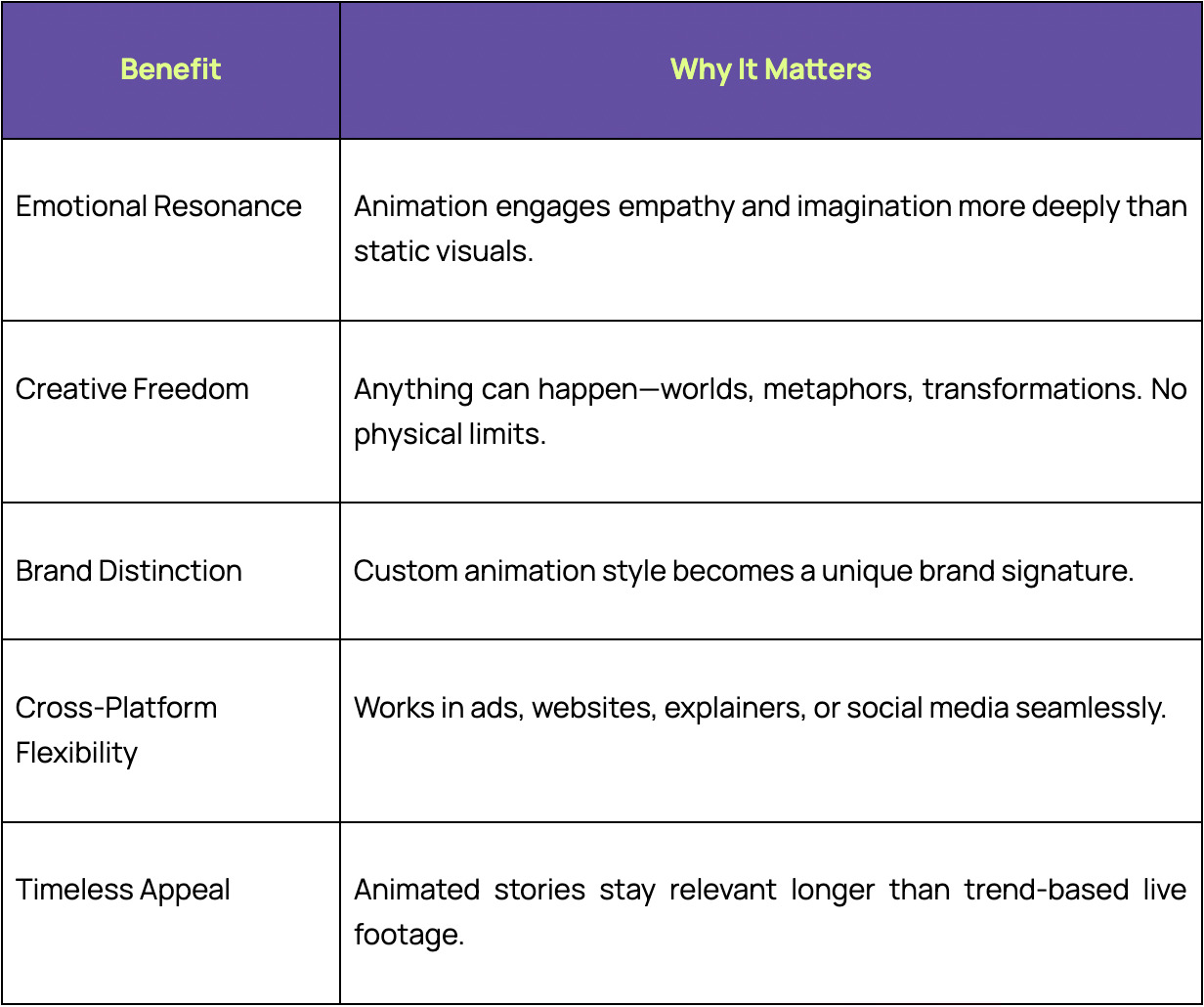
How to Craft a Brand Story Using Animation
Start With Emotion, Not Product
Ask: What do we want people to feel? Build your visual narrative around that.
Use Characters as Brand Voices
Animated mascots or symbolic figures help audiences relate emotionally.
Keep It Simple and Metaphoric
Don’t overexplain. Use motion, color, and visual symbolism to convey meaning.
Focus on Flow and Pacing
A good story feels like a song, animation lets you sync emotion with rhythm and motion.
End With Transformation
The best brand stories show a change on how your product or idea improves someone’s world.
Animation Storytelling Formats That Work for Brands
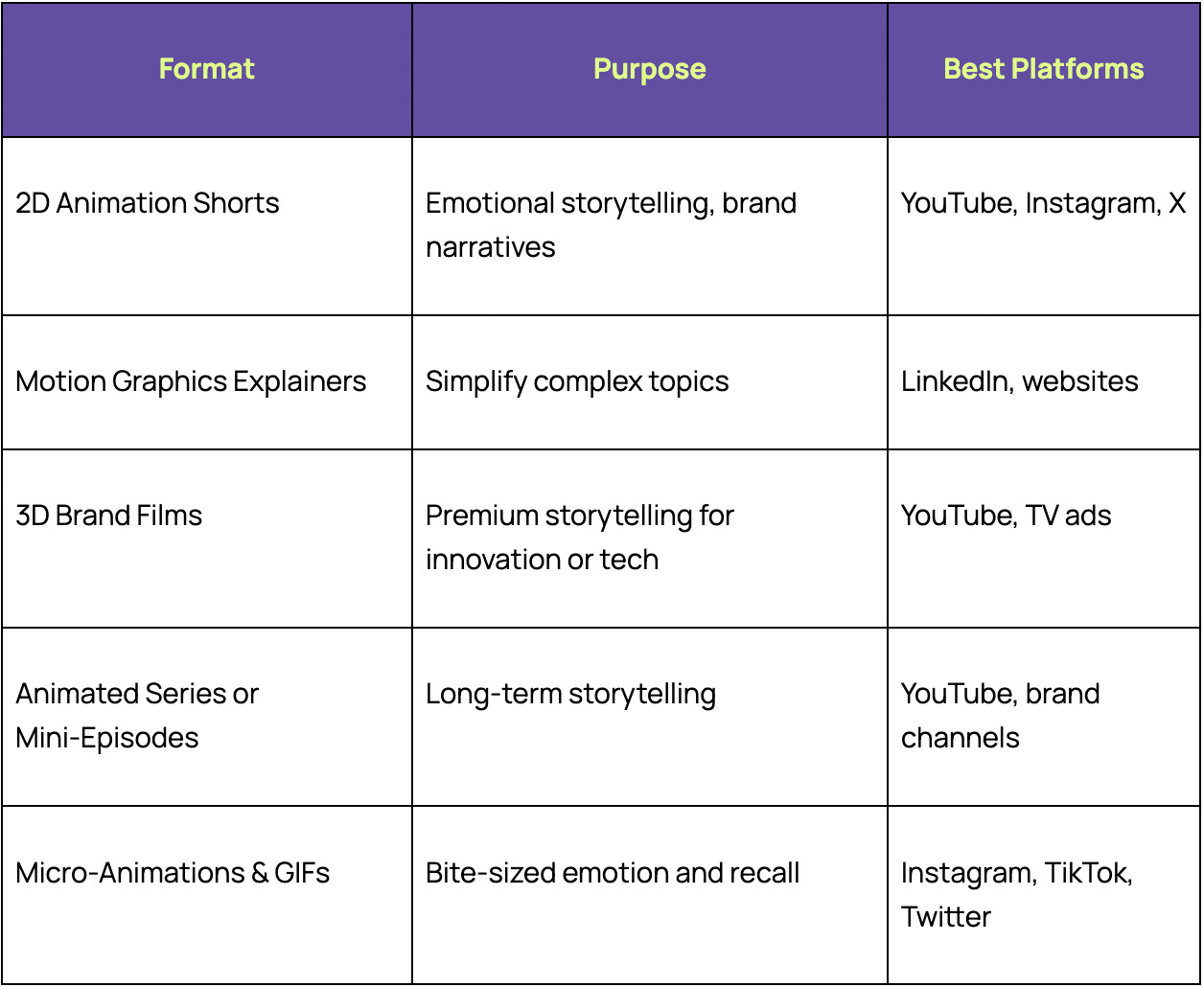
How Animation Strengthens Brand Loyalty
- Builds emotional memory—people remember stories, not ads
- Creates visual consistency across campaigns
- Helps audiences understand your “why”
- Increases engagement and shareability
- Turns your brand into a story-driven experience, not just a business
Ready to Tell Your Brand Story Through Animation?
Animation isn’t just about motion, it’s about emotion. The right visuals can turn your brand message into something people feel and remember.
👉Get a free consultation or quote from Elliemotion Studio to discover how your brand can tell stories that move people.
Also read: What High-End Brands Should Look For In An Animation Video Partner
Frequently Asked Questions
1. Why should brands use animation for storytelling?
Because animation can convey emotion, tone, and complex ideas faster and more creatively than live video.
2. What types of stories work best with animation?
Emotional, educational, or conceptual stories, anything that needs imagination or abstract visualization.
3. How long should a brand storytelling animation be?
Ideally 60–120 seconds for emotional stories, and 30–60 seconds for digital or ad formats.
4. Do animated brand stories work for B2B companies?
Absolutely. Brands like Salesforce and HubSpot use animation to humanize tech and simplify data-heavy messages.
5. How do I start creating an animated story for my brand?
Start with your brand values and message. Then collaborate with an animation studio like Elliemotion to turn that vision into a visual narrative.
Visit Us
Mactaggart Building, 42 Mactaggart Road,
#02-01E, Singapore 368086
Contact Us
© Elevate Future Labs Pte. Ltd. 2026