03 November 2025
Minimalism isn’t a trend, it’s a philosophy.
In branding, minimalist design strips away everything unnecessary, leaving only what truly matters: clarity, emotion, and function. The result? A brand that feels timeless, confident, and easy to recognize. A minimalist brand identity doesn’t shout, it speaks clearly and confidently.
What Is a Minimalist Brand Identity?
A minimalist brand identity focuses on simplicity, clean structure, and intentional use of space, color, and typography.
It’s not about being plain — it’s about being precise.
Key traits of minimalist identity design:
- Simple, scalable logos
- Limited color palette (1–3 main tones)
- Clean typography with generous spacing
- Consistent use of negative space
- Refined imagery and shapes
- Emphasis on function and meaning over decoration
Why Minimalist Branding Works
1. Clarity and Focus
A minimalist design removes noise, helping your audience understand your brand faster — perfect for today’s fast-scroll world.
2. Timeless Appeal
Trends fade. Minimalism lasts. That’s why top brands like Apple, Nike, and Google all lean on simplicity.
3. Premium Perception
Minimalist design often signals luxury and confidence. It shows that your brand doesn’t need to over-explain itself.
4. Stronger Brand Recognition
When you remove clutter, your logo and visuals become easier to remember.
5. Cross-Platform Consistency
A simple, adaptable identity scales beautifully across web, print, motion, and social media.
Core Elements of a Minimalist Brand Identity
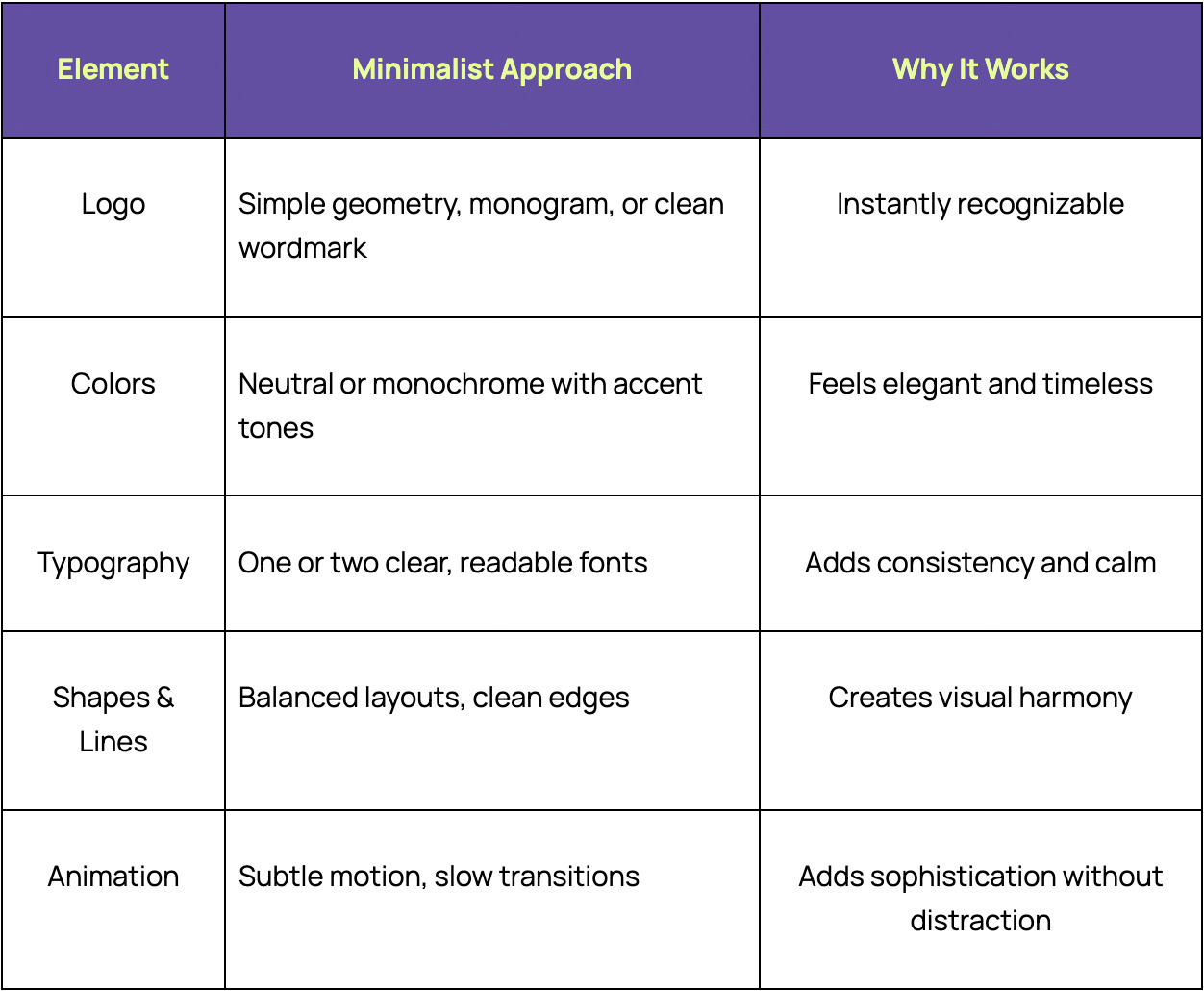
Pro tip: In 2025, motion is part of minimalism, think smooth logo reveals, subtle fades, and elegant transitions.
When to Choose a Minimalist Brand Identity
Minimalism works best if your brand wants to project:
- Modern professionalism (tech, design, consulting)
- Luxury or lifestyle appeal (fashion, architecture, interior design)
- Clarity and trustworthiness (finance, SaaS, healthcare)
It’s also ideal for startups that want to look established and timeless from day one.
Minimalist Brand Identity in 2025: What’s New
Minimalism keeps evolving — here are the latest directions this year:
- Motion Minimalism — Animated logos that use clean, fluid transitions
- Muted Tones + Neutrals — Soft earth palettes and off-whites
- Geometric Typography — Sans-serif fonts with strong modular shapes
- Symbolic Simplicity — Logos distilled to one visual metaphor
- AI-Aided Refinement — AI tools help designers explore ultra-clean iterations
Trend insight: Brands are mixing minimalism with emotion — balancing restraint with warmth.
The Psychology Behind Minimalist Design
Minimalism feels calm, organized, and reliable. It appeals to audiences overwhelmed by noise and clutter, giving them space to breathe.
Psychologically, minimalist design conveys:
- Trust through balance
- Confidence through simplicity
- Clarity through structure
That’s why minimalist brands feel premium and effortless, even if every detail is meticulously planned.
Examples of Iconic Minimalist Brands
- Apple: Monochrome identity, ultra-clean layouts, simple animations
- Nike: Bold swoosh + whitespace + confident messaging
- Google: Simplified logo evolution that prioritizes digital adaptability
- Chanel: Pure typography, black-and-white palette, eternal elegance
These brands prove that less isn’t boring — it’s timeless.
Designing Minimalism That Still Feels Alive
Minimalist branding shouldn’t feel cold or sterile. The secret lies in emotionally intelligent simplicity, using subtle motion, color, and tone to inject warmth.
At Elliemotion, we help brands design minimalist identities that move, literally. From sleek logos to elegant motion systems, we blend clarity with emotion to create brands that stand the test of time.
Let’s design your minimalist brand identity with Elliemotion.
Frequently Asked Questions
1. Is minimalist design suitable for all brands?
Not always. It’s best for brands seeking clarity, elegance, and professionalism, not those that rely on playfulness or maximal expression.
2. What’s the difference between simple and minimalist design?
Simple design reduces complexity. Minimalist design reduces distraction, focusing on essential meaning.
3. How many colors should a minimalist brand identity use?
Usually 1–3 primary colors, supported by neutrals like black, white, or beige.
4. Can minimalism include animation or motion?
Yes! Minimalist motion (like smooth reveals or slow fades) enhances storytelling without breaking simplicity.
Visit Us
Mactaggart Building, 42 Mactaggart Road,
#02-01E, Singapore 368086
Contact Us
© Elevate Future Labs Pte. Ltd. 2026