What Is a 3D Billboard? How Anamorphic Advertising Actually Works
Case Study
2026-10-30T01:00:00.000Z
A 3D billboard stops people who were about to walk past.
That's the whole pitch. Flat screens blend into the background now. Everyone has seen a looping ad before. A 3D billboard, built with anamorphic illusion, looks like something is physically breaking out of the screen. People stop. They film it. They send it to a friend.
Here's how the format actually works, and two real campaigns that show what it can do.
What is a 3D billboard, really?
A 3D billboard isn't a physical 3D object. It's a flat LED screen playing content that's been built to look three-dimensional from one specific viewing angle.
The trick is in the render, not the hardware. We build the scene in 3D, pick the exact angle people will view the screen from, then warp the footage so the perspective lines up perfectly from that spot. Get the angle right and a product looks like it's floating off the screen into the street.
This is why it's also called anamorphic advertising. Anamorphic just means the image is distorted so it only looks correct from one point of view, the same trick used in old forced-perspective film sets.
Samsung: Launching a Phone That Folds, on a Screen That Appears to Fold Too
When Samsung launched the Galaxy Z Fold7, the brief was simple on paper and hard in practice. Make a folding phone feel like a big deal on a screen, in a city full of screens.
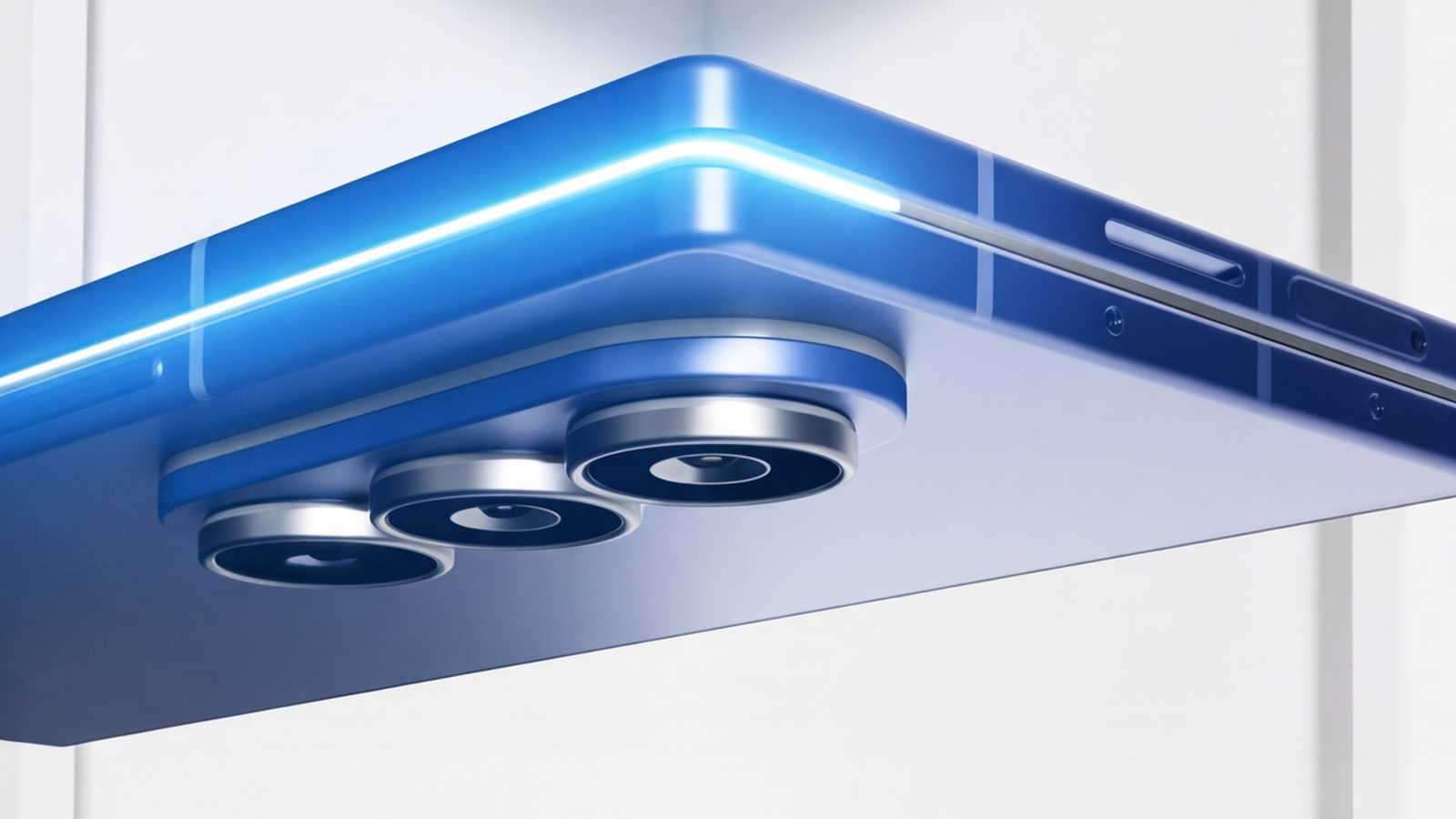
Working with JCD Australia and Clemenger BBDO Melbourne, we built a 3D anamorphic activation for a high-traffic Melbourne site. The device appeared to unfold and extend past the edge of the screen, turning a routine commute into a moment people stopped for.
A premium phone needs to look premium. 3D billboards gave the Z Fold7 scale and depth a flat ad couldn't match.
See the full case study: Samsung Galaxy Z Fold7.
Borderlands 4: Bringing a Video Game's Chaos Into a Train Station
Game launches live or die on hype in the first week. For Borderlands 4, one of the year's most anticipated AAA titles, the job was to carry that chaotic, cel-shaded energy off the screen and into a real space.
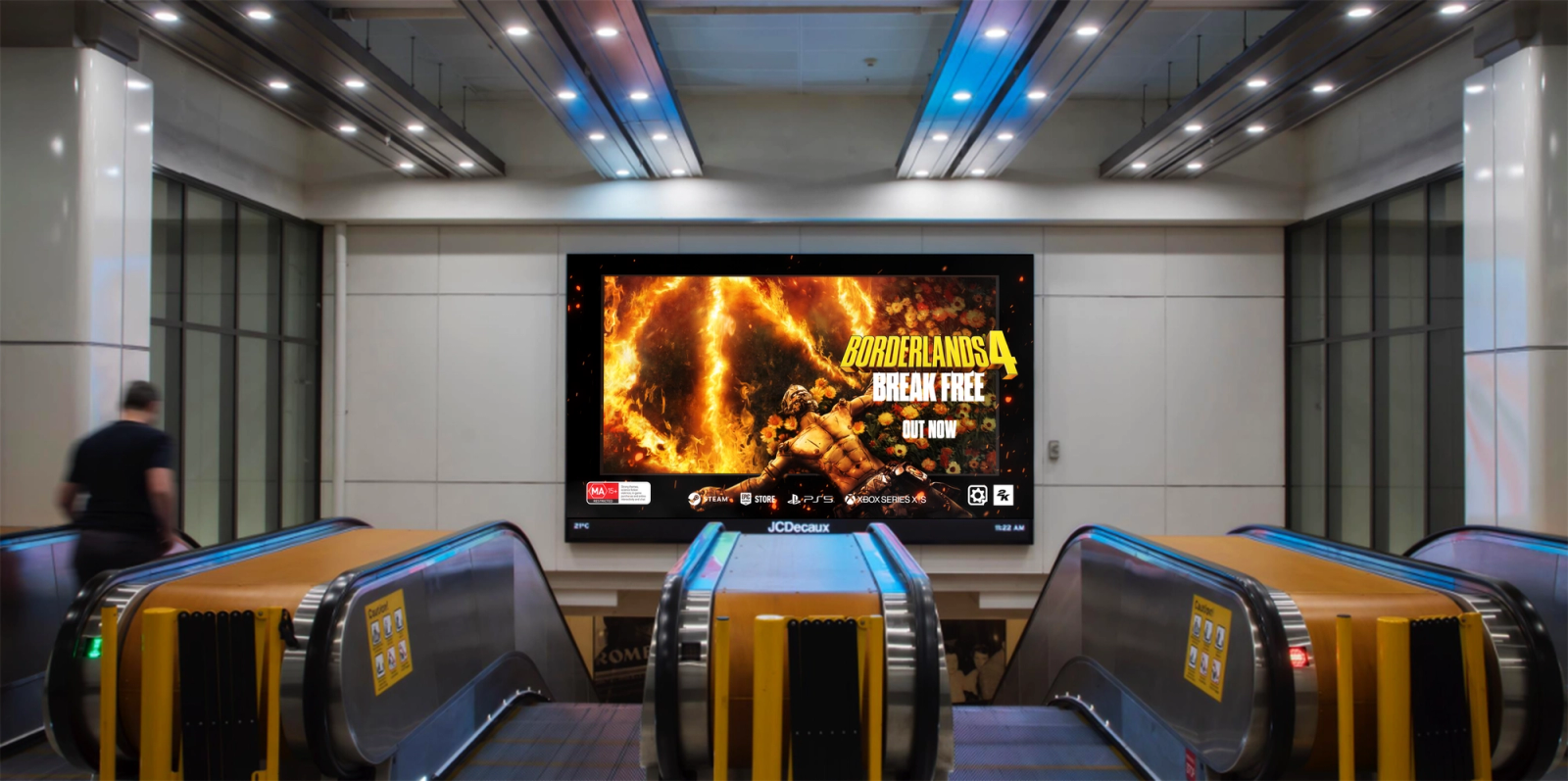
We built large-format digital content for Wynyard station in Sydney, amplifying the game's signature look at a scale no trailer or poster could reach. Commuters walked into the game's world instead of just seeing an ad for it.
Different brand, different category, same lesson. Whether it's a phone or a game, a 3D billboard turns a feature list into a moment.
See the full case study: Borderlands 4 - Break Free.
Why 3D Billboards Work Better Than Standard Digital Out-of-Home
- They're unexpected. Most DOOH content loops the same flat ad. A 3D billboard looks different enough that people's brains flag it as worth a second look.
- They're shareable. A product appearing to break the screen is the kind of thing people film and post, extending reach past the people who physically walked by.
- They work for more than product shots. Samsung sold a device. Borderlands 4 sold a feeling. The format flexes to the brief.
- They reward a strong location. Both campaigns picked high-foot-traffic sites on purpose, since a 3D billboard needs an audience walking through the right viewing angle to land.
Is a 3D Billboard Right for Your Next Campaign?
It fits best when you have one moment that needs to feel big: a launch, a drop, an event. It needs a strong location with predictable foot traffic from one direction, and content built specifically for that screen and angle, not a resized version of your TV ad.
Browse more of our DOOH and 3D anamorphic work to see what else fits your next launch.
FAQ
1. What's the difference between a 3D billboard and a regular digital billboard?
A regular digital billboard plays flat video. A 3D billboard plays content built with forced perspective, so from one viewing angle it looks like objects are physically extending off the screen.
2. Do you need special screens for a 3D billboard?
No. Most 3D billboards run on standard LED screens, often L-shaped or corner units for the strongest illusion. The effect comes from how the content is rendered, not the hardware.
3. How long does a 3D billboard campaign take to produce?
It depends on the complexity of the scene and how much of it is built in 3D versus filmed. Simple concepts can move fast. We'll cover a real two-week turnaround in a follow-up post.