What Is Digital Out-of-Home (DOOH) Advertising?
Case Study
2026-11-08T01:00:00.000Z
Digital out-of-home advertising is just a screen in a public place.
That's the simple version. A billboard that used to be printed vinyl is now an LED screen that can change content by the hour. What's changed is everything you can do with that screen once it's digital.
Here's what DOOH actually covers, and how brands are using it beyond just swapping a static poster for a video loop.
What Does DOOH Actually Mean?
DOOH stands for digital out-of-home. It covers any advertising screen in a public space that isn't a TV or a phone: train station screens, mall displays, roadside LED billboards, airport screens.
The difference from traditional out-of-home isn't just that it's a screen instead of a poster. A digital screen can run different content at different times of day, target different locations with different messages, and be built for formats a printed poster never could, like motion, 3D illusion, or content timed to a live event.
Three Formats, Three Different Jobs
DOOH isn't one thing. The format you pick changes what the screen is actually doing for the brand.
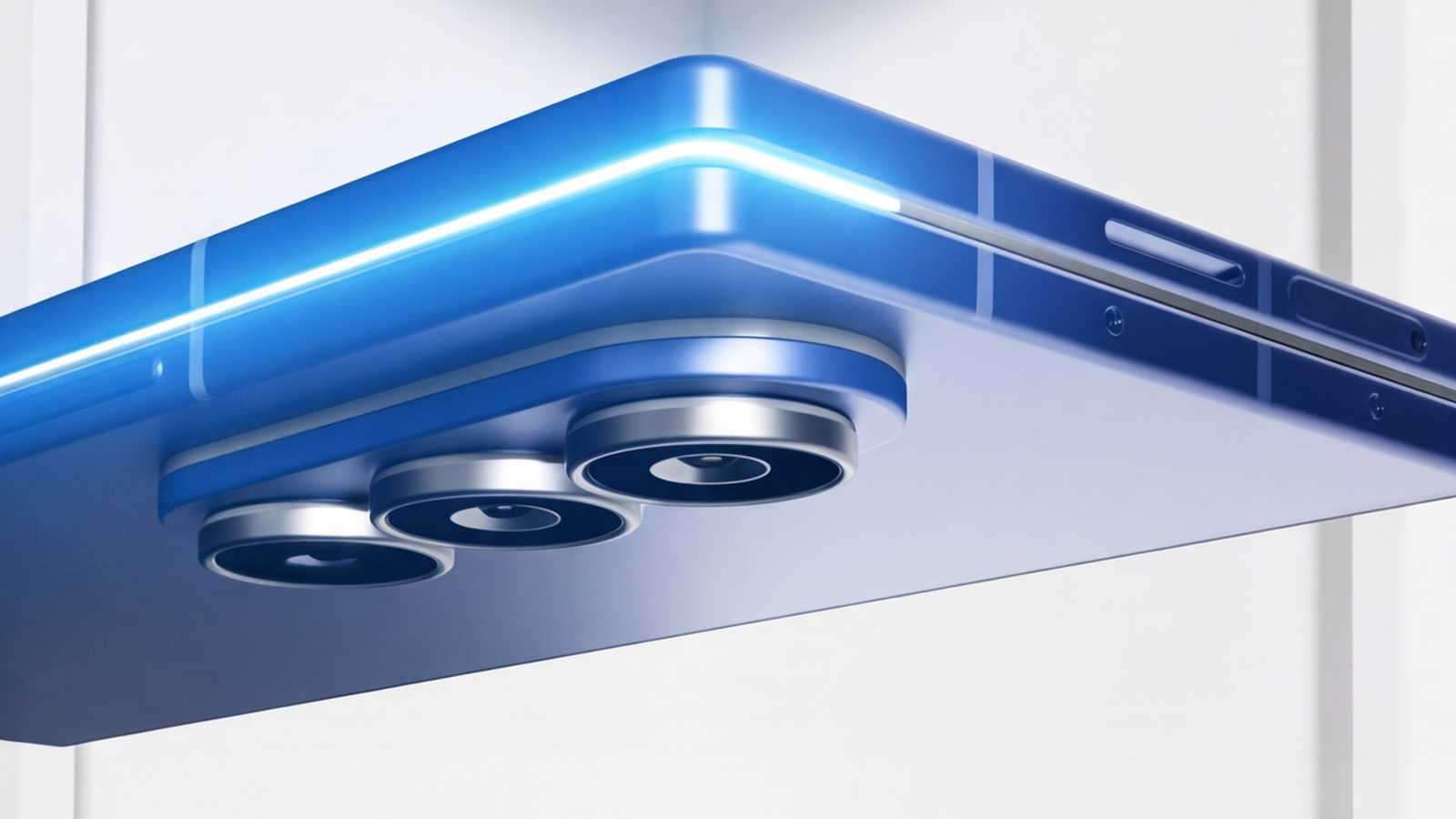
3D anamorphic. Built to look three-dimensional from one exact viewing angle, this is the format that stops people mid-walk. We used it for Samsung's Galaxy Z Fold7 launch in Melbourne, making the device appear to unfold off the screen.
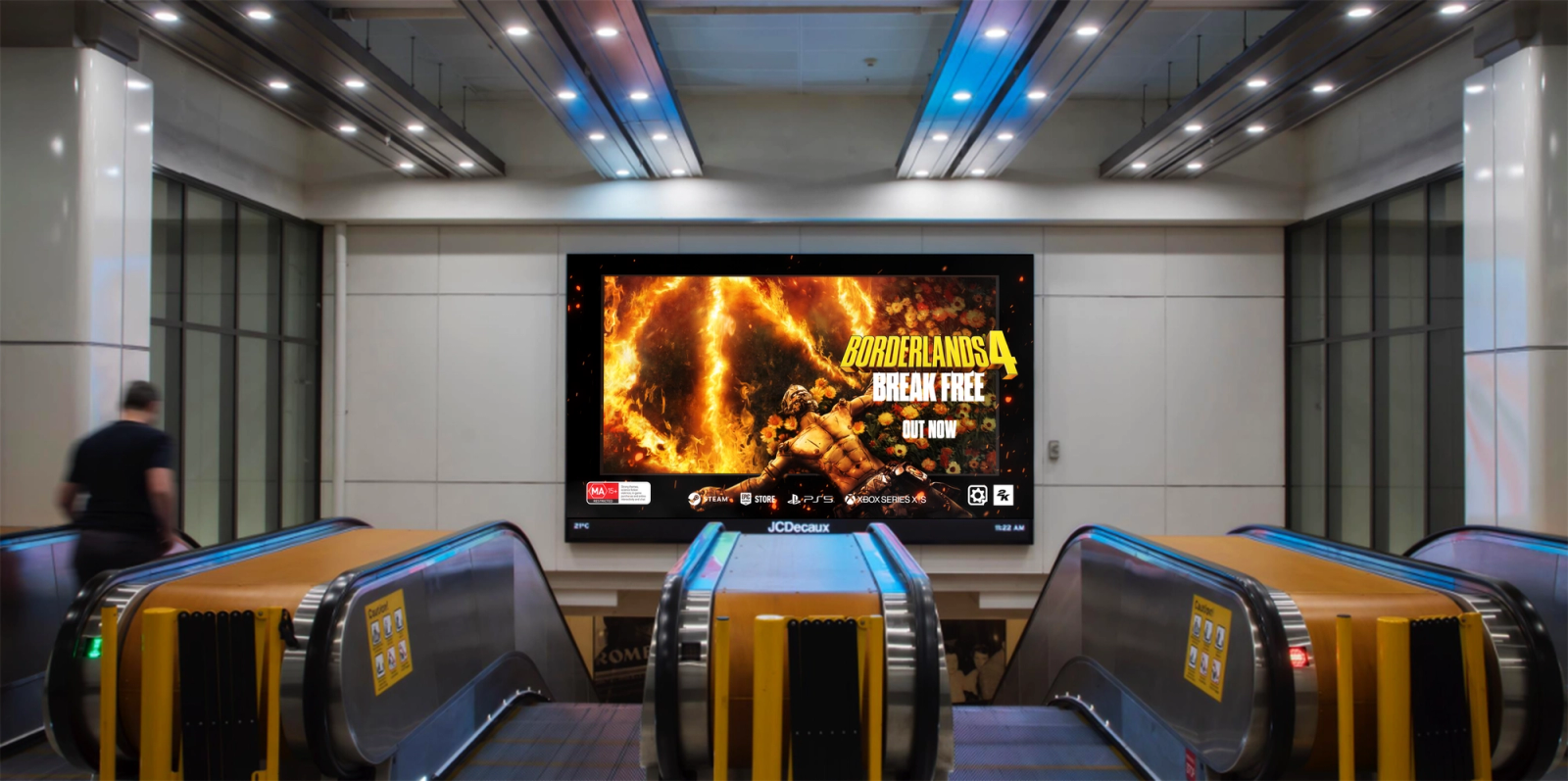
Large-format motion content. Not every screen needs a 3D trick. For the Borderlands 4 launch at Wynyard station, the job was pure scale and energy, carrying the game's cel-shaded look into a train station at a size no poster could match.
Standard digital loops. The simplest DOOH format, a video or image sequence playing on a straightforward schedule. Most retail and transit screens run this way, and it's still effective when the goal is reach and frequency rather than a standout moment.
See the full case studies: Samsung Galaxy Z Fold7
and Borderlands 4 - Break Free.
Why Brands Are Shifting Budget Into DOOH
- It's hard to skip. Unlike a pre-roll ad or a social post, a screen in a train station or mall doesn't have a skip button.
- It's location-specific. Content can be built for exactly where it runs, a launch near a flagship store, a message timed to commute hours.
- It's shareable. The more visually striking formats, especially 3D anamorphic, get filmed and shared past the people who physically walked by.
- Production has gotten faster. A tighter AI-assisted pipeline means a DOOH campaign can go from brief to screen in weeks, not months.
Is DOOH Right for Your Brand?
It depends on what you need the moment to do. A product launch or event benefits from a standout format like 3D anamorphic. An always-on retail message is usually better served by a simpler, repeatable digital loop. Either way, the production approach should match the job, not the other way round.
Browse our DOOH and 3D anamorphic work to see which format fits your next campaign.
FAQ
1. What's the difference between DOOH and traditional out-of-home advertising?
Traditional out-of-home is a static, printed format, like a vinyl billboard. DOOH is a digital screen, which means the content can change, be scheduled, and use formats like motion or 3D illusion that print can't.
2. Is 3D anamorphic the same thing as DOOH?
No. 3D anamorphic is one specific format within DOOH. DOOH is the broader category of digital public screens, and anamorphic is one way to use that screen.
3. How do you choose which DOOH format to use?
Start with the goal. A launch moment usually calls for something visually distinct, like 3D anamorphic. An ongoing retail or awareness campaign usually works better as a simpler, repeatable loop.