Open Source AI Models: What They Actually Unlock for Brands
Most AI tools you use day to day run on someone else's servers. You send a prompt. Their cloud API sends back an image or a clip. You never touch the model itself.
Open source AI models work differently. You download the model. You run it on your own machines. That's what people mean by local AI image generation and local AI video generation.
Once a brand has that local setup running, a few things change.
The economics change first. You pay for electricity and hardware, not a fee per image or per second of video. For high-volume, always-on content, that adds up fast.
Privacy changes too. Your product photos, your brand assets, your unreleased campaign ideas, stay on your own machines. They don't pass through a third-party server. That matters for sensitive work, like early-stage characters, unreleased products, or a brand spokesperson's likeness.
Customization goes deeper as well. With a cloud API, you get what the company lets you access. With a local, open source model, you can fine-tune it. Build a specific style on top of it. Lock in one character design and keep it consistent. That consistency is often the whole point in AI in advertising, where a campaign has to look like one thing across dozens of pieces.
We've used exactly this approach in real production work.
Cloud tools vs. your own local pipeline
Tools like GPT image generation, or Gemini's Nano Banana, are closed and cloud-hosted. You send a prompt, pay per call, and get a result back in seconds.
For a quick, one-off image, that's hard to beat. No setup. No hardware. No learning curve.
But that convenience comes with limits.
You can't fine-tune these models. You get whatever version the company has released, nothing more specific to your brand.
Keeping one character or style consistent across dozens of assets is hard this way. Each generation is its own roll of the dice, shaped by whatever that model currently favors.
Your prompts and inputs pass through someone else's servers. For a quick test image, that's usually fine. For a brand spokesperson's likeness, or an unreleased campaign concept, it's worth a second thought.
And you're capped by whatever access tier you're given. Rate limits, feature limits, pricing, all set by someone else's roadmap.
Local open-weight models like Krea2 and MiniMax H3 trade that ease for control. You can fine-tune them to your brand. Keep a character looking the same across a whole campaign. Keep every asset on your own infrastructure.
The tradeoff is real. You need the local setup in place first, the hardware and the pipeline. That's the investment this whole approach is built on.
Neither path is wrong. A one-off image for an internal deck is a fine job for a closed cloud tool. A campaign character that needs to look the same across fifty pieces, and stay private before launch, is a better fit for your own local pipeline.
How we used it: pre-production on Laurier's "Verified." campaign
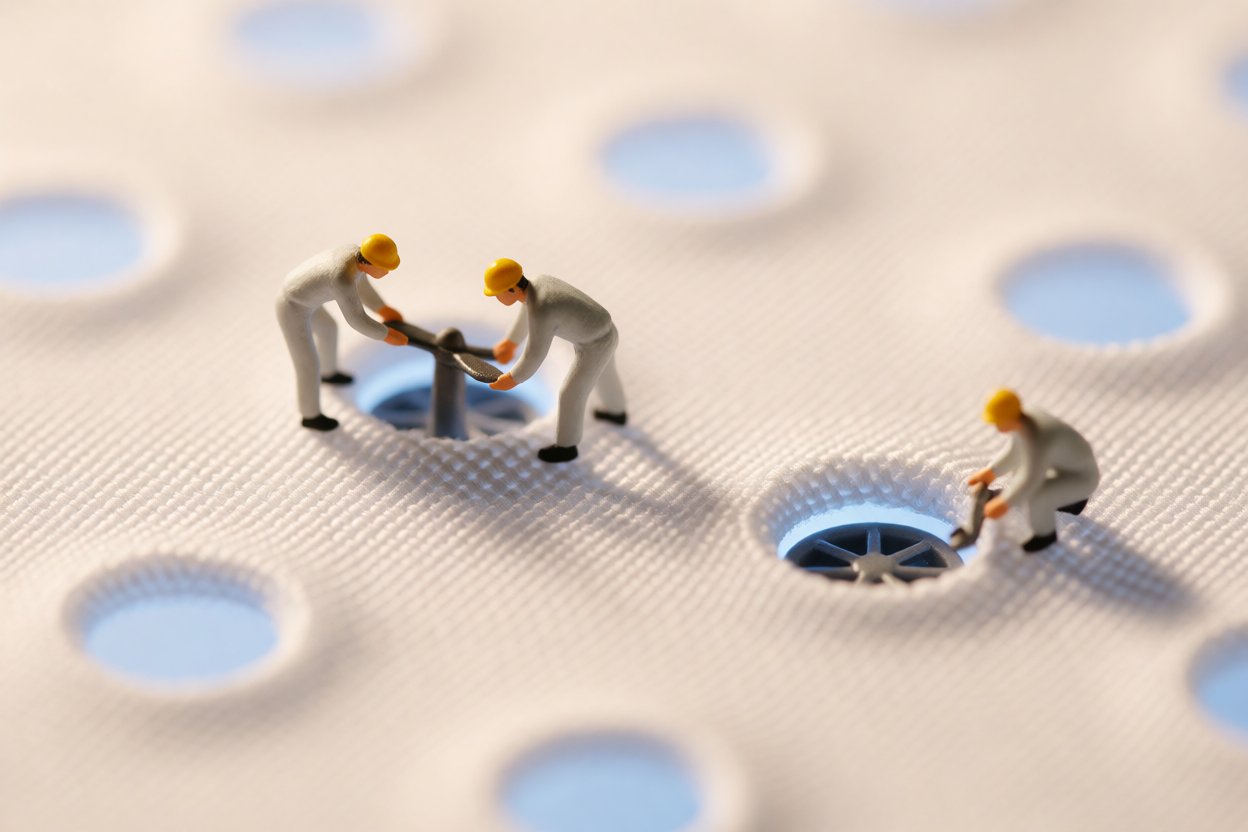
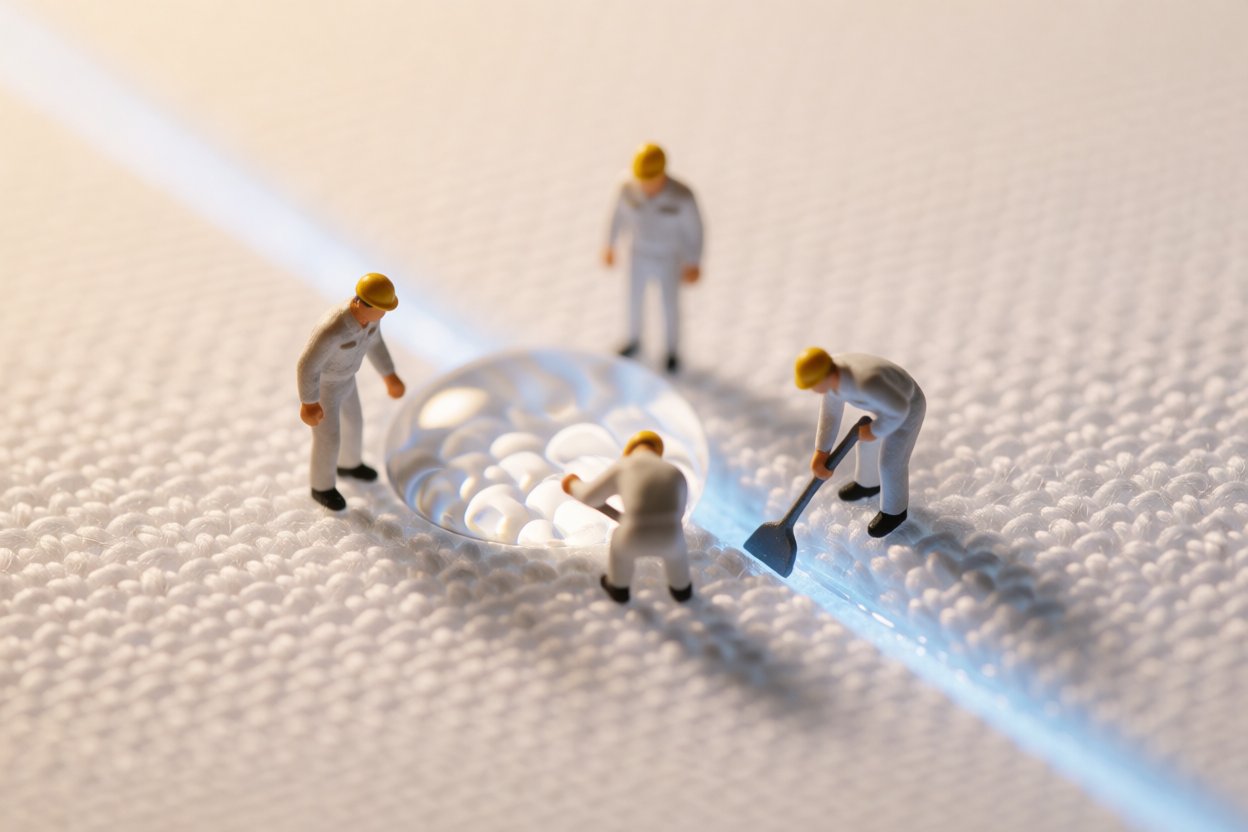
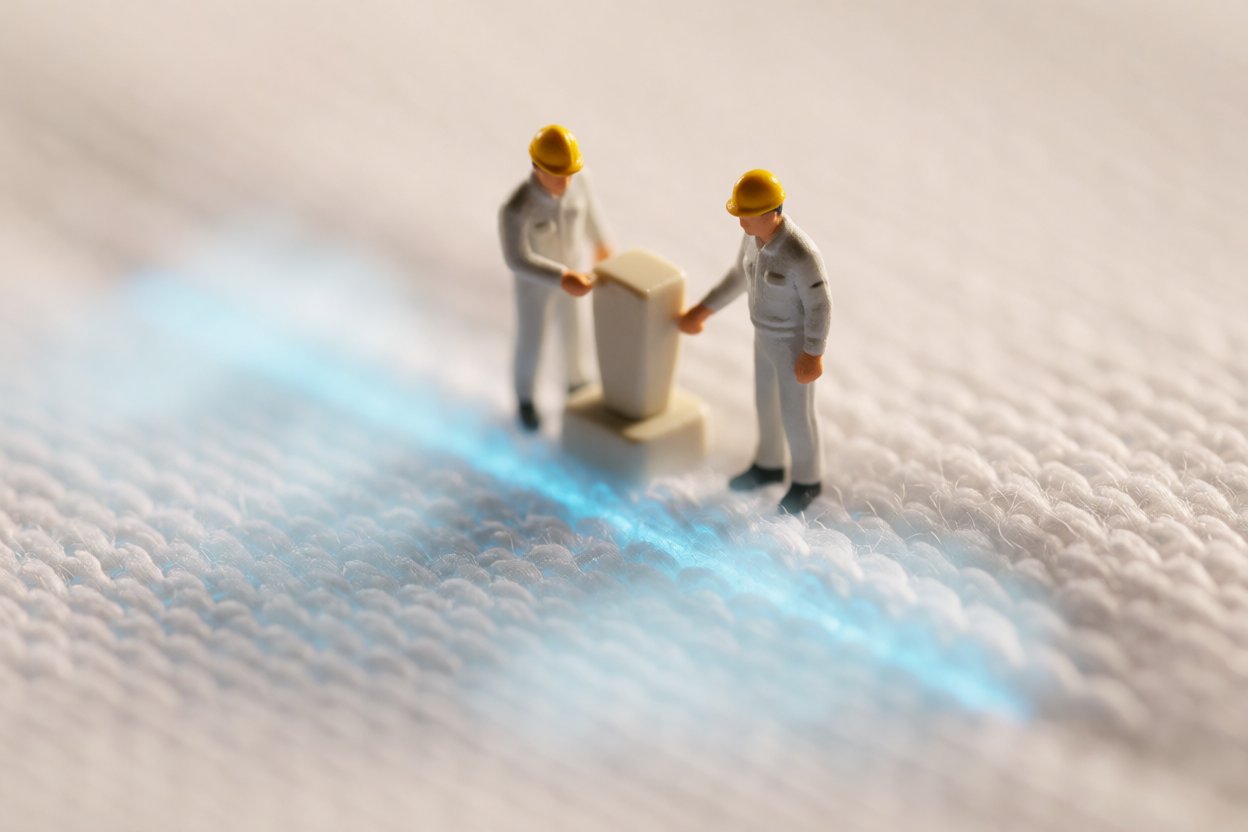
The concept was a micro-world diorama look. A tiny, hand-built world, with miniature "worker" characters moving through it.
In pre-production, we used Krea2, an open-weight image model we run locally, to quickly test character directions for those mini-worker figures. We also ran early animation passes in MiniMax H3, an open-weight video model, also run locally.
Running both locally meant we could iterate fast during that ideation phase. Generate a worker character. Check it against the diorama's scale and lighting. Adjust the prompt. Try again. All inside our own pipeline. No per-generation fees piling up while we found the right look.
Once the look was locked, final production moved onto frontier cloud models for the finished shots. The diorama itself was still built by hand, by our team. The craft, the lighting, the texture. The local pipeline gave us fast, cheap iteration up front. Frontier tools and people carried it through to the finished campaign.
The 3 stills below are from that local pre-production pipeline. The clip below them is the finished campaign cutdown, produced with frontier cloud models in final production.
A plain-language primer: Krea2 and MiniMax H3
Here's what these two tools actually do, in simple terms.
Krea2 generates images. It's open-weight, meaning the model file itself is public. You download it and run it yourself, usually inside a tool called ComfyUI. Think of ComfyUI as the control panel. You set the inputs, Krea2 does the generating.
MiniMax H3 goes a step further. It generates and animates video. In pre-production, we used it to test quick motion passes on our still mini-worker images, before final production moved onto frontier models for the finished animation.
You don't need to be an engineer to follow this. For a brand, what matters is what running these tools locally lets your team do: generate fast, test often, and keep full control of the results.
What this actually gives a brand
Cost control. No per-generation fees eating into your budget as volume goes up.
Creative control. Fine-tune a model to match your brand's exact look, and hold that consistency across a whole campaign.
Faster iteration. Try ten versions of a character or scene in the time a cloud API takes to process a handful, because you're not paying or queuing for each one.
No lock-in. You're not tied to one company's pricing or roadmap for a tool that's now part of your production pipeline.
Data staying in-house. Your assets, your characters, your unreleased work, stay on your own infrastructure.
This is still a young space. Open source AI models move fast. The tools we used on Laurier might not be the best option in six months. But the shift underneath them matters. Brands that build their own local AI image generation and local AI video generation capability now are building a real, lasting skill set.
More insights
Related reading
How 3D Anamorphic Content Actually Gets Made
How 3D anamorphic content actually gets made, from screen measurements and AI previsualization through on-site calibration. A look inside Ellie Motion's process for anamorphic DOOH and billboard activations.
How AI actually fits into a production pipeline
How AI actually fits into a content automation pipeline, from AI previs and iteration through AI moderation and human review in the content delivery workflow. Where AI speeds things up, and where Ellie Motion keeps a person deciding.